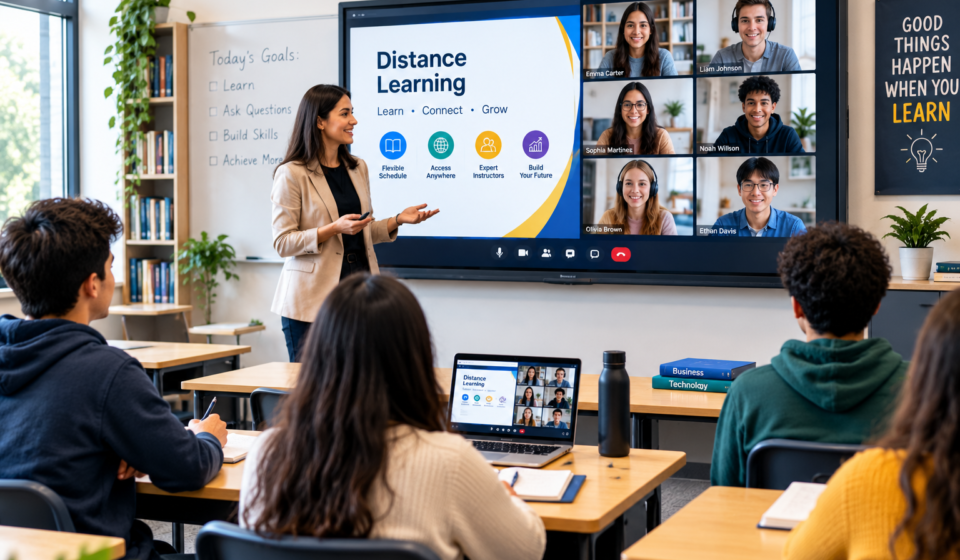

Education no longer requires sitting at a traditional desk. Modern distance learning lets you master fresh skills, earn respected degrees, and advance your career directly from home. Millions of students now use digital classrooms to learn on their own schedules without sacrificing quality or personal commitments.
This shift offers complete freedom over your daily routine. High-speed internet, smart study tools, and interactive platforms make online education faster and more effective than ever before. Whether you want to switch fields or finish a degree, distance learning provides an accessible path to achieve your personal goals.
The Growth of Flexible Remote Education
Traditional schools present real scheduling challenges. Rigid class times, long travel hours, and fixed physical locations stop many adult learners from going back to school. Digital study options completely remove these physical barriers. Anyone with a solid internet connection can connect with top instructors around the world.
Flexibility powers this modern movement. Self-paced modules let you complete assignments early in the morning or late at night. You control your study schedule, fitting coursework around your full-time job, family obligations, and personal life.
Remote degree options also lower tuition costs and erase daily transit expenses. Students save money on housing, campus fees, and gas while building valuable skills.
Digital classrooms build strong independence. You develop sharp time management skills that modern employers actively look for when hiring top talent.
Key Highlights of Modern Distance Learning
Online education goes far beyond simple recorded lectures. Modern platforms use intelligent features to keep students engaged, motivated, and moving forward toward graduation.
- Adaptive Study Tools: Digital systems track your personal progress and adjust practice problems to match your current skill level.
- Bite-Sized Modules: Short video lessons break complex technical topics into quick, manageable steps that improve memory retention.
- Virtual Collaboration: Live video rooms, discussion boards, and digital workspaces enable seamless group projects from anywhere.
- Practical Industry Projects: Courses focus heavily on real-world projects that produce portfolio-ready work for job applications.
- On-Demand Mentorship: Direct chat features connect you with tutors and academic advisors whenever you hit a roadblock.
Practical Habits for Online Academic Success
Self-directed study demands consistent personal habits. Start by creating a clean, quiet workspace dedicated entirely to your coursework. Keep your study area organized and far away from common household distractions like television screens.
Block out specific study hours on your weekly calendar just like mandatory work meetings. Consistency helps prevent sudden workload spikes and reduces test anxiety.
Actively message classmates in online forums. Sharing study notes and discussing weekly readings creates strong accountability, keeps motivation high, and expands your professional network.
Comparing Distance Learning and On-Campus Education
Choosing between digital formats and physical classrooms depends on your lifestyle, financial goals, and preferred learning environment.
| Feature | Modern Distance Learning | Traditional On-Campus |
| Schedule Freedom | Total control over study hours | Fixed daily class schedules |
| Location | Study from home or anywhere | Mandatory attendance on campus |
| Total Expenses | Reduced tuition, no commuting costs | Higher fees plus travel expenses |
| Learning Speed | Flexible, self-paced progression | Course moves at instructor pace |
| Networking | Global digital student networks | Local, face-to-face peer groups |
| Resource Access | 24/7 digital libraries and archives | Physical library and office hours |
Practical Takeaways and Future Outlook
Digital education continues to evolve rapidly with new tools, virtual lab simulations, and flexible course pathways. Choosing distance learning gives you direct control over your education while helping you balance work and life commitments. Modern learners gain high-demand skills quickly without stepping onto a physical campus. Taking advantage of flexible online education allows you to gain new credentials, advance your career, and build a brighter future at your own speed.
Frequently Asked Questions
Is distance learning recognized by top employers?
Yes, most employers fully respect credentials earned through online programs, especially when offered by accredited universities and established institutions.
How do I manage my time during an online course?
Establish a fixed weekly calendar, set daily goals, eliminate household distractions, and use digital planners to track assignment due dates consistently.
Do I need advanced technical skills to start?
No, basic computer skills, internet browsing experience, and familiar word processing tools are usually all you need to start learning online immediately.
Can I interact with my instructors during remote classes?
Yes, instructors offer virtual office hours, direct email communications, live video Q&A sessions, and moderated discussion boards to support student learning.
Backend SEO Metadata
Meta Description (STRICTLY Max 100 characters, including spaces):
Discover how distance learning offers flexible, affordable, top-tier education from anywhere.Distance Learning Strategies That Deliver Real Results in 2026
Education no longer requires sitting at a traditional desk. Modern distance learning lets you master fresh skills, earn respected degrees, and advance your career directly from home. Millions of students now use digital classrooms to learn on their own schedules without sacrificing quality or personal commitments.
This shift offers complete freedom over your daily routine. High-speed internet, smart study tools, and interactive platforms make online education faster and more effective than ever before. Whether you want to switch fields or finish a degree, distance learning provides an accessible path to achieve your personal goals.
The Growth of Flexible Remote Education
Traditional schools present real scheduling challenges. Rigid class times, long travel hours, and fixed physical locations stop many adult learners from going back to school. Digital study options completely remove these physical barriers. Anyone with a solid internet connection can connect with top instructors around the world.
Flexibility powers this modern movement. Self-paced modules let you complete assignments early in the morning or late at night. You control your study schedule, fitting coursework around your full-time job, family obligations, and personal life.
Remote degree options also lower tuition costs and erase daily transit expenses. Students save money on housing, campus fees, and gas while building valuable skills.
Digital classrooms build strong independence. You develop sharp time management skills that modern employers actively look for when hiring top talent.
Key Highlights of Modern Distance Learning
Online education goes far beyond simple recorded lectures. Modern platforms use intelligent features to keep students engaged, motivated, and moving forward toward graduation.
- Adaptive Study Tools: Digital systems track your personal progress and adjust practice problems to match your current skill level.
- Bite-Sized Modules: Short video lessons break complex technical topics into quick, manageable steps that improve memory retention.
- Virtual Collaboration: Live video rooms, discussion boards, and digital workspaces enable seamless group projects from anywhere.
- Practical Industry Projects: Courses focus heavily on real-world projects that produce portfolio-ready work for job applications.
- On-Demand Mentorship: Direct chat features connect you with tutors and academic advisors whenever you hit a roadblock.
Practical Habits for Online Academic Success
Self-directed study demands consistent personal habits. Start by creating a clean, quiet workspace dedicated entirely to your coursework. Keep your study area organized and far away from common household distractions like television screens.
Block out specific study hours on your weekly calendar just like mandatory work meetings. Consistency helps prevent sudden workload spikes and reduces test anxiety.
Actively message classmates in online forums. Sharing study notes and discussing weekly readings creates strong accountability, keeps motivation high, and expands your professional network.
Comparing Distance Learning and On-Campus Education
Choosing between digital formats and physical classrooms depends on your lifestyle, financial goals, and preferred learning environment.
| Feature | Modern Distance Learning | Traditional On-Campus |
| Schedule Freedom | Total control over study hours | Fixed daily class schedules |
| Location | Study from home or anywhere | Mandatory attendance on campus |
| Total Expenses | Reduced tuition, no commuting costs | Higher fees plus travel expenses |
| Learning Speed | Flexible, self-paced progression | Course moves at instructor pace |
| Networking | Global digital student networks | Local, face-to-face peer groups |
| Resource Access | 24/7 digital libraries and archives | Physical library and office hours |
Practical Takeaways and Future Outlook
Digital education continues to evolve rapidly with new tools, virtual lab simulations, and flexible course pathways. Choosing distance learning gives you direct control over your education while helping you balance work and life commitments. Modern learners gain high-demand skills quickly without stepping onto a physical campus. Taking advantage of flexible online education allows you to gain new credentials, advance your career, and build a brighter future at your own speed.
Frequently Asked Questions
Is distance learning recognized by top employers?
Yes, most employers fully respect credentials earned through online programs, especially when offered by accredited universities and established institutions.
How do I manage my time during an online course?
Establish a fixed weekly calendar, set daily goals, eliminate household distractions, and use digital planners to track assignment due dates consistently.
Do I need advanced technical skills to start?
No, basic computer skills, internet browsing experience, and familiar word processing tools are usually all you need to start learning online immediately.
Can I interact with my instructors during remote classes?
Yes, instructors offer virtual office hours, direct email communications, live video Q&A sessions, and moderated discussion boards to support student learning.