
When business operations break down or recurring errors stall growth, quick fixes rarely solve the core issue. Patching symptoms might buy time, but real growth happens when you eliminate the true source of a failure. Understanding what is a root cause analysis gives your team a proven framework to investigate operational bottlenecks, human errors, and system failures. By digging past surface-level symptoms, this powerful method helps organizations save thousands of dollars and hundreds of working hours every single year.
Unpacking the Core Process of Identifying Systems Failures
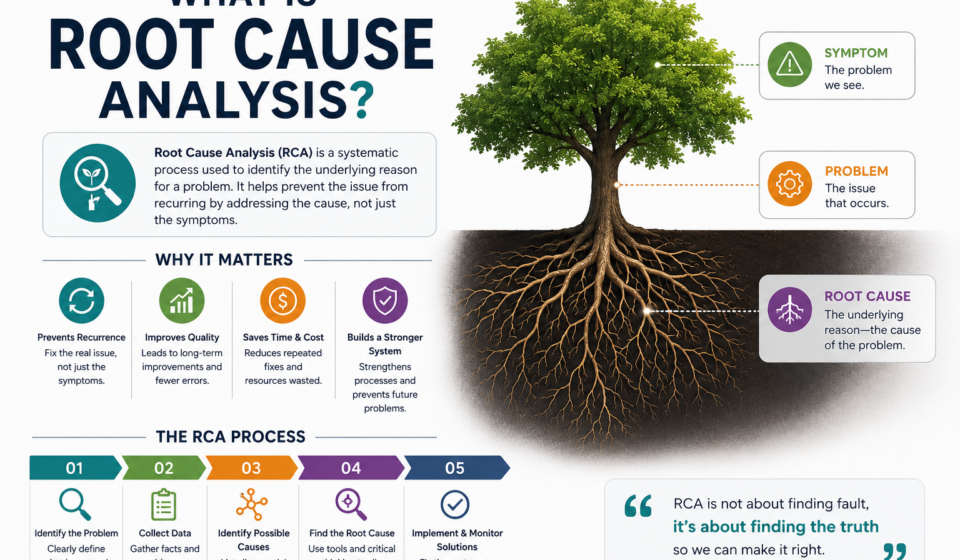
At its core, investigating operational breakdowns requires shifting your focus from who made a mistake to why the system allowed that mistake to happen. Surface issues are merely visible indicators of deeper systemic breakdowns hiding beneath your everyday workflows.
When leaders ask what is a root cause analysis, they are looking at a structured process designed to uncover original triggers. Instead of placing temporary patches over broken processes, this systematic approach traces an event backward step by step until it reaches the true baseline origin.
Conducting this evaluation helps teams spot hidden patterns across different operational units. By examining equipment performance, human factors, and communication channels simultaneously, management creates resilient processes that resist future disruptions.
Key Methods and Steps for Effective Investigation
To execute a successful evaluation, problem solvers rely on established techniques tailored to their specific industry needs. Using structured methods prevents team members from jumping to premature conclusions.
- The 5 Whys Technique: Asking “why” five consecutive times to drill straight through surface symptoms down to the primary cause.
- Fishbone (Ishikawa) Diagram: A visual mapping framework grouping potential drivers into categories like machinery, manpower, materials, and methods.
- Failure Mode and Effects Analysis (FMEA): A proactive approach mapping out potential operational failure points before they trigger real-world damage.
- Pareto Analysis: Applying the 80/20 rule to determine which small cluster of core factors causes the majority of system defects.
Operational Tips for Team Brainstorming Sessions
Gather a cross-functional group representing every phase of the affected process to build a comprehensive picture. Ensure everyone focuses on factual data and documented timelines rather than personal opinions or emotional reactions.
Comparing Popular Diagnostic Frameworks
Selecting the right diagnostic tool depends heavily on your team’s industry context and the overall complexity of the issue.
| Diagnostic Method | Ideal Use Case | Core Strengths | Complexity Level |
| 5 Whys | Quick operational fixes | High speed, minimal training needed | Low |
| Fishbone Diagram | Complex multi-departmental issues | Excellent visual grouping of variables | Medium |
| Pareto Chart | Data-heavy quality control | Clear visual focus on major defect drivers | Medium |
| FMEA | New product launches and risk engineering | High prevention capacity before deployment | High |
Practical Takeaways and Future Process Design
Grasping what is a root cause analysis transforms organizational culture from reactive firefighting to proactive, strategic improvement. By making thorough investigations a standard business practice, companies replace guesswork with dependable data, ensuring past mistakes never repeat themselves.
Modern platforms now integrate predictive analytics and artificial intelligence to highlight operational risks before catastrophic failures happen. Combining cutting-edge technology with these foundational analytical frameworks guarantees long-term efficiency, lower operational overhead, and steady organizational performance.
Frequently Asked Questions (FAQs)
What is a root cause analysis in simple terms?
It is a structured problem-solving approach used to identify the underlying source of a problem rather than just addressing its immediate, visible symptoms.
What are the main steps in conducting this type of analysis?
The process involves defining the problem, gathering operational data, identifying contributing factors, pinpointing the true root cause, and implementing permanent corrective actions.
Why is this approach better than immediate quick fixes?
Quick fixes only mask symptoms, allowing the underlying problem to return repeatedly. Root-level solutions eliminate the core flaw completely, saving resources long term.