
Launching a new enterprise without a clear strategy often leads to wasted capital and operational confusion. Turning your ambitious business idea into a profitable reality requires structure, focus, and clear financial projections. That is where a professional business plan template becomes your most valuable strategic tool. Whether you are pitching to venture capitalists, applying for small business loans, or streamlining internal operations, a structured roadmap keeps your goals on track. By organizing market research, operational logistics, and revenue models into a digestible format, you turn abstract concepts into an actionable launch strategy that drives sustainable long-term commercial growth.
Strategic Fundamentals: Structure Your Vision for Success
A business plan template provides the foundational scaffolding needed to evaluate commercial viability before spending significant capital. Instead of writing dozens of unstructured pages, this visual tool helps you focus on high-impact operational mechanics.
The core structure guides founders through defining unique value propositions, target customer segments, and competitive market dynamics. It forces leadership teams to address potential operational bottlenecks before they cause costly delays.
Using a standardized layout also ensures clear communication with outside stakeholders. Investors, bank loan officers, and potential co-founders can quickly evaluate your revenue projections, marketing channels, and team capabilities without getting lost in unnecessary technical jargon.
Core Elements of a High-Impact Business Blueprint
A comprehensive organizational plan breaks down complex commercial projects into manageable operational sections. Including these core components ensures your pitch covers every vital detail.
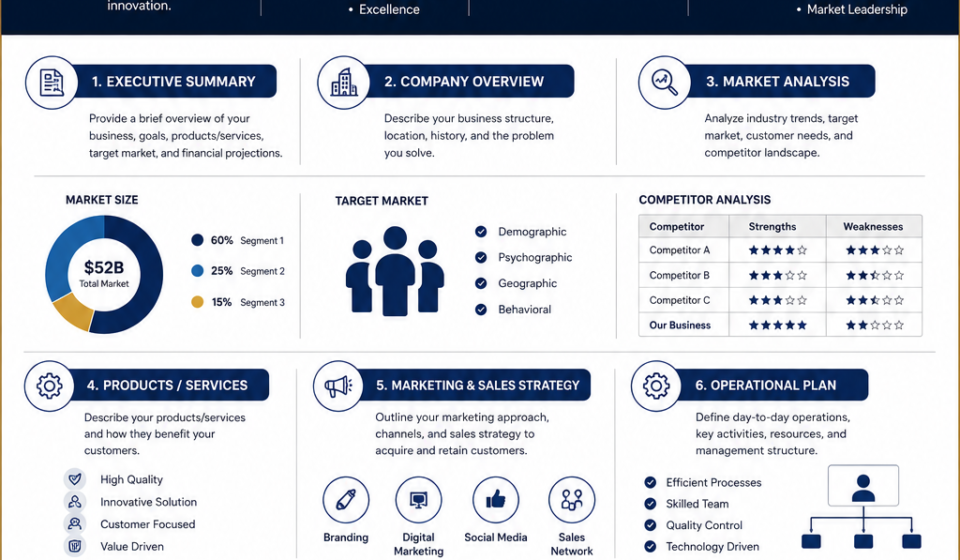
- Executive Summary: A high-level overview detailing your business mission, unique offering, target market, and financial growth targets.
- Company Description & Ownership: Clear breakdown of your business structure, ownership details, and core operational objectives.
- Market & Competitor Analysis: Detailed research evaluating target customer demographics, industry trends, and key direct competitors.
- Products and Services Breakdown: Clear descriptions of your offerings, manufacturing sources, intellectual property, and pricing models.
- Marketing & Sales Execution: Concrete strategies covering lead generation, customer acquisition costs, and retention models.
- Financial Plans & Projections: Comprehensive revenue targets, balance sheets, break-even analyses, and startup budget requirements.
Actionable Tip: Focus Heavily on Cash Flow Projections
When building your financial sheets, prioritize cash flow estimates over total sales projections.
Many promising startups fail simply because they run out of liquidity before collecting pending receivables. Calculating your exact monthly burn rate gives you the financial foresight needed to navigate early operational challenges.
Structural Comparison: Traditional vs. Lean Startup Layouts
Selecting the right planning framework depends entirely on your immediate funding requirements, operational timeline, and business goals.
| Planning Format | Ideal Use Case | Total Length | Primary Focus Area |
| Traditional Business Blueprint | Bank loans, institutional investor pitches | 15 to 30 pages | Exhaustive operational and financial data |
| Lean Startup Model | Tech startups, quick market testing | 1 to 2 pages | Rapid validation, key partnerships, core metrics |
| Nonprofit Structural Plan | Foundation grants, donor presentations | 10 to 20 pages | Community impact metrics, donor sustainability |
| Franchise Acquisition Guide | Buying an established brand franchise | 15 to 25 pages | Territorial expansion, strict brand compliance |
Practical Takeaways and Future Growth Outlook
Utilizing a dynamic business plan template converts ambitious commercial ideas into resilient operational strategies. By documenting market dynamics, clear financial metrics, and targeted sales channels, you eliminate expensive guesswork and build immediate credibility with key stakeholders.
As digital tools evolve, interactive modern platforms allow founders to update revenue models dynamically as market conditions shift. Keep your strategic blueprint fresh, review performance metrics monthly, and adapt your operational roadmap continuously to achieve lasting business success.
Frequently Asked Questions (FAQs)
What is the primary purpose of a business plan template?
The primary purpose is to provide a structured, organized framework that helps entrepreneurs define strategy, manage operations, and secure funding from investors or banks.
How long should a modern business blueprint be?
Traditional plans run between 15 to 30 pages for bank financing, while quick lean models can summarize core operational details on a single structured page.
How often should an active business plan be updated?
You should review your operational strategy quarterly and update key projections whenever your enterprise introduces new products, shifts pricing, or enters new markets.