
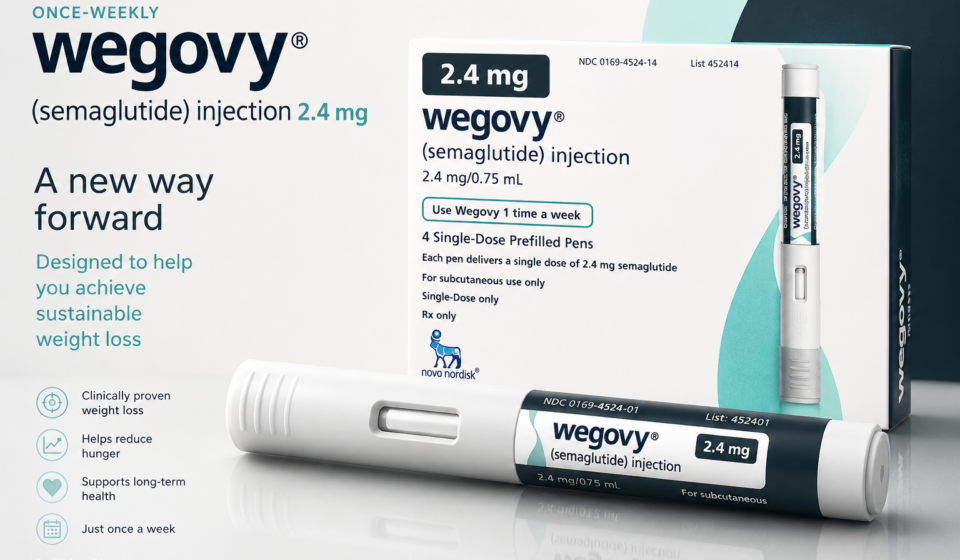

Wegovy (active ingredient: semaglutide) is an FDA-approved prescription medication indicated for chronic weight management and cardiovascular risk reduction in adults with obesity or overweight accompanied by weight-related medical conditions.It is designed to be used alongside a reduced-calorie diet and increased physical activity.
Mechanism of Action
Semaglutide belongs to a class of medications known as GLP-1 receptor agonists.It mimics the human glucagon-like peptide-1 (GLP-1) hormone, which is naturally released by the intestines following food intake.
- Appetite Regulation:Acts on receptors in the brain to signal fullness and reduce hunger signals.
- Delayed Gastric Emptying:Slows the rate at which food moves through the stomach, prolonging satiety.
- Glycemic Control:Enhances glucose-dependent insulin secretion while lowering glucagon levels.
Standard Dosing and Administration
Wegovy is typically administered as a once-weekly subcutaneous injection.Treatment begins at a low dose to allow the gastrointestinal system to adjust, gradually escalating over several months.
| Phase | Duration | Standard Dose |
| Initiation | Weeks 1–4 | 0.25 mg weekly |
| Dose Escalation | Weeks 5–16 | Titrated upward (0.5 mg, 1.0 mg, 1.7 mg) |
| Maintenance | Week 17+ | 2.4 mg weekly (or 1.7 mg if un-tolerated) |
Key Clinical Considerations & Side Effects
Like all prescription therapies, semaglutide requires medical oversight due to potential adverse effects and contraindications.
- Common Side Effects:Gastrointestinal symptoms are most frequent, including nausea, vomiting, diarrhea, constipation, and abdominal discomfort.
- Serious Warnings:Comes with a boxed warning regarding the risk of thyroid C-cell tumors.It is contraindicated in individuals with a personal or family history of medullary thyroid carcinoma (MTC) or Multiple Endocrine Neoplasia syndrome type 2 (MEN 2).
- Other Risks:Pancreatitis, gallbladder disease, hypoglycemia (especially when combined with insulin or sulfonylureas), and kidney impairment related to dehydration.
Frequently Asked Questions (FAQs)
How is Wegovy different from diabetes medications containing semaglutide?
While both contain semaglutide, Wegovy is specifically formulated and approved at higher maximum maintenance doses (2.4 mg) for chronic weight management and cardiovascular risk reduction, whereas formulations like Ozempic are approved primarily for type 2 diabetes management.
Who qualifies for a Wegovy prescription?
It is typically prescribed for adults with a Body Mass Index (BMI) of 30 or higher, or a BMI of 27 or higher with at least one weight-related condition such as high blood pressure, type 2 diabetes, or high cholesterol.
Is Wegovy intended for short-term or long-term use?
Obesity is recognized as a chronic medical condition, and clinical guidance generally indicates that Wegovy is intended for long-term management under the continued supervision of a healthcare provider.