
Every year, thousands of people face a dangerous hazard right inside their own living rooms. Known as the invisible killer, carbon monoxide poses a real risk to homes relying on fuel-burning appliances. You cannot see it, taste it, or smell it. That makes early detection and awareness essential for keeping your household safe. From gas furnaces to portable generators, everyday tools can turn hazardous without proper ventilation. This quick guide breaks down everything you need to know about staying safe, spotting warning signs, and taking action before a minor leak becomes a life-threatening crisis.
Understanding Carbon Monoxide and How It Formed
This toxic gas builds up when fuels like gas, wood, oil, charcoal, or propane burn incompletely. When appliances operate normally in well-ventilated spaces, the gas escapes safely outside. Problems arise when vents block, equipment degrades, or fuel burns in enclosed spaces.
Inside your body, inhaling carbon monoxide disrupts how your blood carries oxygen. Red blood cells pick up this gas faster than oxygen itself. Over time, oxygen stops reaching vital organs like your heart and brain, leading to severe illness or sudden unconsciousness.
Key Symptoms and Early Danger Signs
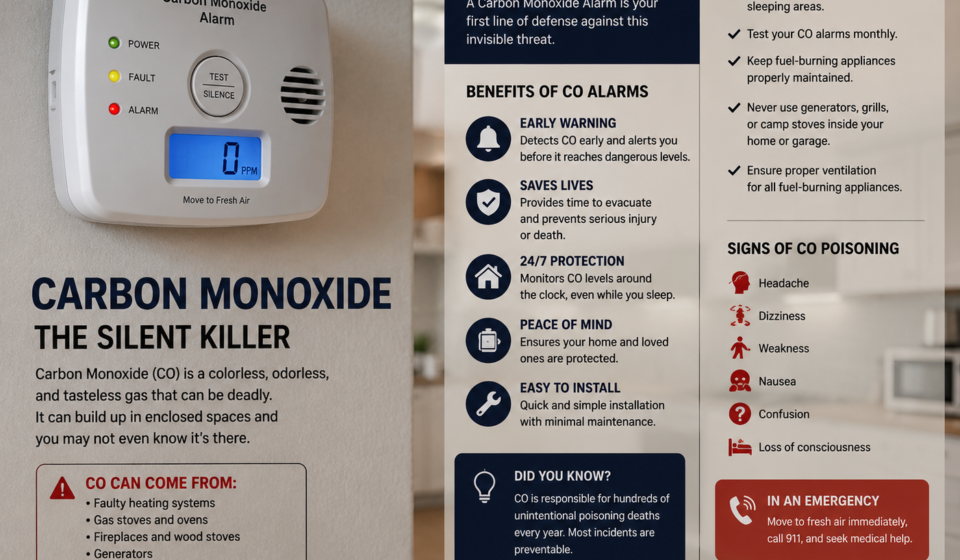
Recognizing exposure early can save lives. Because symptoms mimic common illnesses like the flu or food poisoning, people often ignore initial red flags.
- Early Exposure Signs: Dull headaches, dizziness, fatigue, nausea, and shortness of breath.
- Moderate to Severe Exposure: Confusion, blurry vision, loss of muscle coordination, vomiting, and chest pain.
- Critical Danger Signs: Seizures, sudden loss of consciousness, and cardiac arrest.
Quick Action Steps for Suspected Leaks
If your detector alarm sounds or anyone shows sudden symptoms, act immediately. Open doors and windows if you can do so safely, move everyone outside to fresh air right away, and call emergency services from outside the home. Never re-enter the property until emergency responders confirm it is completely safe.
Risk Factors Across Household Appliances
Different household tools carry varying levels of risk depending on how you use and maintain them.
| Appliance Type | Primary Hazard Cause | Risk Reduction Action |
| Gas Furnaces | Cracked heat exchangers, blocked vents | Schedule annual professional inspections |
| Portable Generators | Running indoors, garages, or near windows | Keep at least 20 feet away from homes |
| Fireplaces & Stoves | Soot buildup, blocked chimneys | Clean flues and chimneys yearly |
| Gas Ranges & Ovens | Using unit for space heating | Never use cooking appliances for heat |
Preventative Steps and Future Safety Solutions
Preventing carbon monoxide hazards starts with active maintenance and proper detector placement. Install dual-sensor alarms on every level of your home, especially right outside sleeping areas. Test these alarms once a month and replace batteries at least once a year.
Modern home safety technology now offers smart detectors that send real-time alerts directly to your smartphone. Integrating smart alarms into your setup provides peace of mind, even when you are away from home. Combine smart hardware with regular maintenance checks to build a reliable defense system for your family.
Frequently Asked Questions
Where should I install carbon monoxide detectors in my house?
Place detectors on every level of your home, inside hallways, and directly outside all sleeping areas. Keep them at least 15 feet away from fuel-burning appliances to avoid false alarms.
How often do carbon monoxide detectors need replacement?
Most standard units last between 5 to 7 years. Check the manufacturer date on the back of your unit and replace it immediately if it passes its expiration window.
Can carbon monoxide pass through walls or ceilings?
Yes. As a gas, it moves easily through drywall, floorboards, and open spaces, which makes proper detector placement critical in multi-family buildings and apartments.