
Radon gas is a silent, invisible threat lurking beneath thousands of foundations. It leaks naturally from soil, seeping into basements and living spaces unnoticed. Breathing this radioactive element over time poses severe health risks, making continuous indoor exposure a top concern for homeowners. The quickest, most reliable way to clear your indoor air is by installing a radon mitigation system. This straightforward technology vent gas out of your home before it ever reaches your lungs. Investing in proper depressurization protects your family, safeguards property value, and delivers clean air for decades. Here is everything you need to know about how these setups operate.
Understanding the Core Technology Behind a Radon Mitigation System
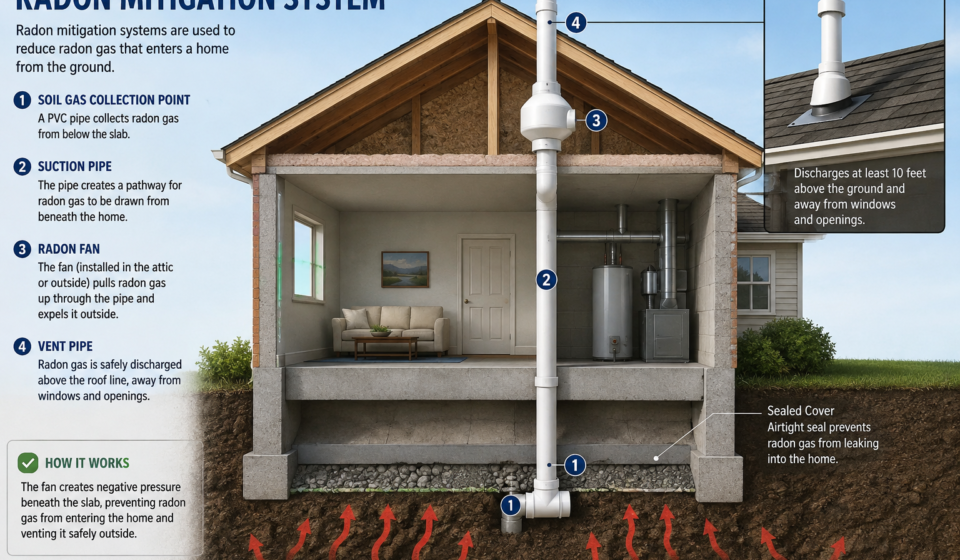
A radon mitigation system relies on continuous negative pressure to direct soil gases away from your living space. Instead of allowing toxic vapors to rise naturally through foundation cracks, a specialized inline fan creates a dedicated vacuum pathway.
Most residential setups use active sub-slab depressurization.Technicians drill a small suction pit through the concrete floor, run durable PVC piping through the house or up an exterior wall, and mount a weatherproof fan near the roofline.The fan pulls gas directly from underneath the slab and exhausts it high into the atmosphere, where wind safely dilutes it.
Key Highlights and System Components
Modern mitigation setups are built for low energy consumption and continuous operation. Understanding each part ensures your setup maintains peak performance year after year.
- Suction Pit: A small cavity excavated beneath your foundation slab that serves as the central collection point for subsurface gas.
- Continuous Vent Pipe:Schedule 40 PVC piping that carries captured air straight from the foundation to a safe release point above the roofline.
- Inline Radon Fan:A specialized, low-wattage exhaust fan designed to run 24/7 with minimal electricity draw.
- U-Tube Manometer: A simple visual pressure gauge installed on the pipe, allowing homeowners to confirm active suction with a quick glance.
- Structural Seals:Polyurethane sealants applied to floor cracks, expansion joints, and sump pump basins to stop gas seepage and maximize suction strength.
Sump Pit Integration for Complete Coverage
If your home already features a sump pump, professionals can retrofit a sealed lid onto the basin to double as a suction point. This dual-purpose strategy reduces installation time, minimizes concrete drilling, and keeps your basement moisture-free while active ventilation handles soil air.
System Comparison & Real-World Options
Different foundation styles require tailored extraction strategies. Selecting the right design keeps installation fast and cost-effective.
| System Type | Best Foundation Fit | Primary Operation Method | Typical Price Range |
| Active Sub-Slab Depressurization | Basements & Concrete Slabs | Electric inline fan creates vacuum under foundation | $800 – $1,500 |
| Crawl Space Encapsulation | Dirt Crawl Spaces | Heavy vapor barrier sealed with active soil suction | $1,500 – $3,500 |
| Passive Depressurization | New Construction Builds | Thermal stack effect vents gas without a fan | $500 – $1,200 |
| Block Wall Evacuation | Hollow Concrete Block Walls | Suction drawn directly from hollow masonry voids | $900 – $1,800 |
Practical Takeaways & Future Outlook
Installing a radon mitigation system gives immediate peace of mind while securing long-term indoor air quality. Modern smart monitors make tracking gas levels easier than ever, giving you real-time data alongside your mechanical system. As building codes adapt to stricter environmental standards, active gas extraction is rapidly becoming a standard home safety feature rather than an optional upgrade. Testing your home today allows you to take charge, eliminate hidden dangers, and maintain a clean living environment for years to come.
Frequently Asked Questions (FAQs)
How much does a professional radon mitigation system cost?
Most homeowners pay between $800 and $1,500 for a standard active sub-slab installation.Total costs depend on home foundation size, layout complexity, and regional labor rates.
How long does a radon mitigation fan last?
High-quality inline radon fans typically last between 5 and 10 years of continuous 24/7 operation.Replacing a worn-out fan is a quick process that costs around $150 to $300.
Will a mitigation system lower my home’s radon levels instantly?
Yes, active suction systems usually drop indoor radon levels significantly within 24 to 48 hours after activation.Follow-up testing confirms your air stays well below recommended safe thresholds.